
Etobicoke Independent Tesla Diagnostics Since 1999
Can A Tesla Battery Be Repaired Or Does It Need Replacement?
Whether a Tesla battery can be repaired or needs full replacement depends on what actually failed — and most Tesla owners in Toronto, Etobicoke, and across the GTA never get a proper answer before being quoted pack replacement prices. Radman Auto Repair diagnoses the actual fault source first. Many expensive replacements turn out to be far simpler repairs.
Serving Etobicoke Since 1999
Model 3, Y, S & X
No Guesswork
Toronto & GTA
Whether a Tesla battery can be repaired depends entirely on what actually failed. Sometimes the problem is not the high voltage battery pack at all. A failing 12V auxiliary battery, a fault in the charging system, a coolant pump issue, a stuck valve, a sensor reading out of range, or a wiring concern can all produce warnings that look and feel like battery pack failure — same touchscreen messages, same charge restrictions, same reduced power alerts.
Other times, a genuine high voltage pack fault exists and needs to be handled by Tesla or a properly qualified high-voltage battery specialist. The key is knowing which situation you are actually in before any replacement decision is made.
Radman is not here to scare Tesla owners into replacing expensive parts. The goal is to interpret the warning, test the related systems, and explain whether the problem is connected to the high voltage battery vs 12V battery, BMS error codes, charging equipment, battery cooling system, or another support system.
If the warning appeared after a charging session, after extreme cold weather, after the car sat unused for a period, or alongside another electrical concern, those context details matter. Bring the exact message text, any BMS code shown on screen, and a description of what the charging behaviour has been like. That information shapes the diagnostic path — and it is how we avoid replacing parts blindly.
Repair vs Replacement: The Core Question
Tesla battery warnings exist on a spectrum. At one end are support-system faults that are entirely repairable — often at a small fraction of pack replacement cost. At the other end are genuine high voltage pack failures that require specialist intervention. A structured diagnostic process is the only way to know which end of that spectrum you are dealing with.
Often Repairable
- 12V / auxiliary battery failure
- Coolant pump failure
- Coolant valve fault
- Low coolant level from a leak
- Temperature sensor fault
- Charge port assembly fault
- Onboard charger fault (some models)
- Octovalve / heat pump fault (Model Y, newer Model 3)
- BMS wiring or connector issue
- Software-generated false fault
- Contactor control fault
May Require Specialist / Pack Replacement
- Cell module failure (confirmed internal fault)
- High voltage internal short circuit
- Confirmed severe cell degradation beyond BMS limits
- Physical pack damage from collision or flood
- Pack-internal coolant intrusion into cells
- Confirmed contactor weld failure inside the pack
The critical point: the items in the left column are far more common causes of Tesla battery warnings than the items in the right column. Many Tesla owners across Toronto and the GTA who have been quoted pack replacement prices have a fault from that left column. Diagnosis tells you which list your problem actually belongs on.
What Can Actually Be Repaired on a Tesla Battery System
The Tesla battery ecosystem is not a single component — it is a collection of systems that work together. Faults in any one of them can trigger BMS alerts and battery warnings. Here is what each component is and how its failure is typically addressed.
| Component | Typical Fault | Outcome |
|---|---|---|
| 12V Auxiliary Battery | Weak voltage causes phantom BMS codes, charging faults, battery warnings, wake-up failures. Extremely common in older Toronto-area vehicles. | Repairable — replace 12V battery. See the 12V battery failure page. |
| Coolant Pump | Reduced flow rate or full failure causes battery temperature warnings, charge rate throttling, and reduced power alerts. | Repairable — pump replacement. See battery cooling system problems. |
| Coolant Valve | Stuck or failed valve misdirects coolant flow. Battery may overheat or fail to pre-condition in cold weather. | Repairable — valve replacement or actuator repair. |
| Coolant Level (Leak) | Low coolant triggers BMS alert. Source may be a hose, clamp, reservoir, or in rare cases a pack seal. | Depends on source — hose/fitting leaks repairable; pack-internal leaks escalate. |
| Temperature Sensor | Out-of-range reading causes BMS to log a fault and restrict charging or power even when pack temperature is actually normal. | Repairable — sensor replacement or wiring repair. |
| Charge Port Assembly | Damaged or failed charge port prevents charging, generates unable-to-charge warnings. See the unable to charge page. | Repairable — charge port replacement. |
| Onboard Charger (OBC) | Failure of AC charging circuitry prevents Level 1 and Level 2 charging. DC fast charging may still work. Primarily Model S/X. | Repairable — OBC replacement or repair depending on fault. |
| Octovalve / Heat Pump (Model Y, newer Model 3) | Fault in the multi-port thermal valve affects battery heating/cooling, cabin heat, and Supercharging simultaneously. | Repairable — octovalve or heat pump component replacement. |
| BMS Wiring / Connectors | Corrosion, damage, or loose connector causes intermittent or persistent BMS faults. Common in high-mileage or weather-exposed vehicles. | Repairable — wiring repair or connector replacement. |
| High Voltage Pack (Cells/Modules) | Genuine cell degradation, module imbalance beyond BMS tolerance, or internal fault confirmed by BMS data. | Specialist / Tesla — pack or module-level intervention required. |
Why the 12V Battery Must Be Checked First
The 12V auxiliary battery is the single most common cause of Tesla battery warning messages that are mistaken for high voltage pack failure. Every Tesla owner in Toronto, Etobicoke, Vaughan, or anywhere in the GTA who receives a battery warning should have the 12V system evaluated before any conclusion about the main pack is drawn.
Here is why it matters so much: the 12V battery powers all of the low-voltage control systems in the vehicle — including the BMS, the charge port controller, the thermal management system logic, and the communication buses that connect these systems together. When 12V voltage drops below the threshold these systems need to operate reliably, they generate fault codes. Those fault codes look identical to codes generated by a genuine high voltage pack problem.
Ontario winters make this worse. A Tesla 12V battery that starts a GTA winter at 80% health may be borderline by February. Vehicles parked outdoors unplugged in −15°C to −20°C temperatures experience additional 12V load as the BMS wakes up periodically to check the high voltage pack — and those overnight wake cycles on an already-stressed 12V battery accelerate the decline. It is not unusual for a Toronto-area Tesla owner to see battery warnings appear for the first time in January or February and assume the main pack has degraded over winter when the actual cause is a failing 12V battery.
Replacing the 12V battery — a routine, relatively inexpensive service — often clears battery warning messages entirely and restores normal charging behaviour. This is why it is always the starting point of Radman's diagnostic process. Full detail on this fault is on the Tesla 12V battery failure page.
Why Diagnosis Before Replacement Matters in Canada
Tesla high voltage battery pack replacement is one of the most expensive repairs in the EV world. Understanding the rough cost range in a Canadian context makes it clear why a proper diagnostic process is not optional — it is the financially responsible first step.
These are general reference ranges, not quotes — individual costs vary by model, year, parts availability, and the specific work required. What they illustrate is the scale of the difference between a support-system repair and a pack replacement, and why a diagnostic fee spent determining which one you actually need is money well spent.
Received a Tesla battery warning in Toronto, Etobicoke, Vaughan, Mississauga, or anywhere in the GTA? Call Radman at (416) 742-4521 before anyone quotes you a pack replacement. Diagnosis first.
How Radman Approaches Tesla Battery Diagnosis
Every Tesla battery diagnosis at Radman follows a structured path. The repair-vs-replacement question only gets answered at the end of that path — not at the beginning.
Exact warning text, BMS alert codes, when it appeared, what charging behaviour has changed, whether it clears after driving or charging, and any other concurrent symptoms. Context shapes the entire diagnostic direction.
The single most common source of false-positive Tesla battery warnings in GTA-area vehicles. Resting voltage, load test, and charging system output are assessed before any further work is done. A weak 12V result here often resolves the entire complaint.
Stored and active BMS fault codes are read. The timestamp and frequency pattern of stored codes — and whether they correlate with charge events, temperature events, or low voltage events — guides the next steps significantly.
The charging cable, charge port, and onboard charger circuit are evaluated for faults that can mimic or contribute to battery-level warnings. See the unable to charge page for more on charge port faults.
Coolant level, pump operation, valve function, and temperature sensor readings are checked. On heat pump vehicles (Model Y, newer Model 3) the octovalve and refrigerant circuit are also evaluated. See battery cooling system problems for the full thermal diagnostic process.
Only after all support systems are evaluated are conclusions drawn about the HV pack itself. BMS cell voltage data, module balance, temperature distribution, and charge/discharge history are reviewed where accessible.
The result is explained in plain language: what failed, what was ruled out, whether the fault is repairable here, and — if pack-level intervention is needed — what the appropriate next step and service path looks like.
This is also why the battery cluster links into Radman's broader Tesla Mechanic Toronto, Tesla brake service, Tesla suspension diagnosis, and check engine and electrical diagnostics pages. A Tesla warning rarely lives in isolation.
Related Tesla Battery Warning Pages
This page is part of Radman Auto Repair's Tesla battery warning and BMS diagnostic hub. Each page covers a specific warning type in depth — useful if you have a specific message on your screen right now.
Tesla Battery Warning Messages & Failure Diagnostics Toronto
The main Tesla battery warning message and failure diagnostics hub for Toronto and Etobicoke.
Tesla Battery Failure Symptoms Toronto
Tesla battery failure symptoms explained including range loss, charge limit warnings, reduced power, charging restrictions and battery alerts.
Tesla Battery Needs Service Warning Toronto
Tesla battery needs service warning explained for Model 3, Model Y, Model S and Model X owners near Toronto and Etobicoke.
Tesla Maximum Charge Level Reduced Warning Toronto
Tesla maximum charge level reduced warning explained, including range loss, reduced charge limits, BMS alerts and when to book a diagnostic.
Tesla Unable To Charge Diagnosis Toronto
Tesla unable to charge warning, charging fault, reduced charge limit and BMS battery alert diagnosis for Toronto and Etobicoke Tesla owners.
Tesla Reduced Power Warning Diagnosis Toronto
Tesla reduced power and acceleration warning diagnosis for Model 3, Y, S and X including battery, cooling, drive unit and low voltage system faults.
Tesla Service Links That Matter
Tesla owners often arrive for one problem and discover another related issue. These Radman resources keep the full service path connected.
The main Tesla service hub for Model 3, Model Y, Model S and Model X owners in the GTA.
Tesla Brake Service
Brake cleaning, corrosion, rotor and friction brake service for EVs that rely heavily on regenerative braking.
Tesla Suspension & Wheel Bearing Repair
For humming, clunking, vibration, ball joint, control arm and wheel bearing symptoms.
Tesla Brake Rust & Corrosion Repair
Tesla brake corrosion diagnosis and service with EV-specific maintenance in mind.
Tesla Battery Diagnosis Before Replacement — Toronto & GTA
Radman Auto Repair is located at 321 Rexdale Blvd #4 in Etobicoke, near the 401 and 427 interchange — one of the most accessible locations in the GTA for Tesla owners coming from any direction. Tesla owners from the following areas regularly make the trip specifically for a second opinion on a battery replacement quote.
Our home base. Minutes from the shop for most west-end Tesla owners.
Lakeshore-area Tesla owners reach us quickly via Hwy 427 or Kipling.
Allen Road or 400 to 401 west puts most North York Tesla owners within 25 minutes.
Hwy 400 south is a direct route for Vaughan and Woodbridge Tesla owners. Many come to us after being quoted pack replacement elsewhere.
Just south of Hwy 400 — Concord and Maple residents have easy southbound access to Rexdale Blvd.
401 east or 427 north brings Mississauga Tesla owners to Etobicoke in under 20 minutes outside peak hours.
Queen Street east or Hwy 427 routes bring Brampton Tesla owners to Rexdale reliably.
Hwy 404 or 400 to 401 west is the usual route for north-GTA Tesla owners seeking independent diagnosis.
Gardiner west to 427 north. Downtown Tesla owners regularly come to Etobicoke specifically for diagnosis before committing to expensive repairs.
If you have been quoted a Tesla battery replacement and want a diagnostic second opinion, call us at (416) 742-4521 or book online. We will tell you clearly what the fault actually is — and whether pack replacement is genuinely necessary.
Frequently Asked Questions
Can a Tesla battery be repaired?
It depends on what actually failed. Many components in the Tesla battery ecosystem — the 12V battery, coolant pump, coolant valves, charge port, onboard charger, temperature sensors, BMS wiring, and heat pump components — are individually repairable or replaceable without touching the high voltage pack. A genuine HV pack fault (confirmed cell failure, internal short, or severe module imbalance) typically requires Tesla or a qualified high-voltage battery specialist. Proper diagnosis is the only way to determine which situation you are in.
Does every Tesla battery warning mean the main battery has failed?
No. A large proportion of battery warning messages — Battery Needs Service, Maximum Charge Level Reduced, Unable to Charge, Reduced Power — are generated by support-system faults rather than the HV pack. The 12V battery is the most common single cause. A weak 12V battery produces phantom BMS codes that are indistinguishable from pack failure warnings without proper testing. Cooling system faults, sensor errors, and charge port problems also mimic pack failure. See the Tesla battery warning hub for the full picture.
Should I diagnose the 12V and charging system before agreeing to battery replacement?
Always. The 12V battery and charging system must be evaluated and ruled out before any conclusion about the high voltage pack is made. This is not a formality — it is the step that most frequently prevents an unnecessary pack replacement. In the GTA's climate, older Teslas parked outdoors unplugged through Ontario winters are particularly prone to 12V degradation that produces convincing battery warning messages. A $300–$500 12V replacement frequently resolves what looked like a $20,000+ pack problem.
What does a Tesla battery pack replacement cost in Canada?
Out-of-warranty HV pack replacements in Canada have ranged from approximately $15,000 to $30,000+ CAD depending on model, pack size, and service provider. These figures make the case for diagnosis first very clearly — spending a diagnostic fee to determine whether pack replacement is actually necessary is consistently worthwhile. If this is your issue, we can help at a fraction of the cost.
Should I keep driving with a Tesla battery warning?
If the car says it is OK to drive, avoid aggressive acceleration, keep charge above 20%, avoid fast charging until diagnosed, and book service promptly. If the vehicle will not charge, will not wake up, or shows an unsafe operation warning, do not delay. Call Radman at (416) 742-4521 to assess urgency based on your specific message.
Do you service Tesla owners from across the GTA?
Yes. Radman Auto Repair at 321 Rexdale Blvd #4 in Etobicoke serves Tesla owners from Toronto, Mississauga, Brampton, Vaughan, Woodbridge, Concord, North York, York Mills, Mimico, Richmond Hill, Markham, Rexdale, and the wider GTA. Our location near the 401 and 427 interchange makes us accessible from most parts of the city and inner 905 without a difficult commute.
Can Radman diagnose Tesla battery and BMS warnings?
Radman Auto Repair handles Tesla warning-message diagnosis, 12V battery evaluation, charging system inspection, thermal management diagnosis, BMS fault code review, and related EV support-system troubleshooting. True high voltage pack repair may require Tesla or a qualified high-voltage battery specialist depending on the confirmed fault — and Radman will tell you clearly if that is the case, rather than guessing or recommending replacement without evidence.





Cities We Serve
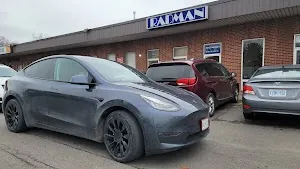
Located in Rexdale, Radman Auto Repair serves Tesla owners across Etobicoke, Toronto, Mississauga, Brampton, Vaughan, Woodbridge, Concord, North York, York Mills, Mimico, Richmond Hill, Markham, and the GTA for Tesla battery diagnosis, repair-vs-replacement assessments, and all other Tesla service needs.
| Toronto, Ontario | Etobicoke, Ontario | Mississauga, Ontario | Brampton, Ontario |
| Vaughan, Ontario | Richmond Hill, Ontario | Markham, Ontario | Weston, Ontario |