
Etobicoke Independent Tesla Diagnostics Since 1999
Tesla BMS_a079 Error | Unable To Charge Maximum Charge Level Reached
BMS_a079 is the Tesla Battery Management System code associated with "Unable to Charge — Maximum Charge Level Reached" and charge level restriction behaviour. It is one of the most misunderstood BMS codes because the car appears to charge normally — then stops below the set limit with no obvious explanation. Radman Auto Repair in Etobicoke diagnoses BMS_a079 for Toronto and GTA Tesla owners with a structured process that starts with the most fixable causes first.
Serving Etobicoke Since 1999
Model 3, Y, S & X
No Guesswork
Toronto & GTA
A Battery Management System alert indicating the BMS has imposed an invisible charge ceiling — the vehicle will not charge above an internal threshold that is lower than the owner's set charge limit. Appears alongside "Maximum Charge Level Reduced" or "Unable to Charge" messages on the touchscreen.
An owner sets the charge limit at 90%. The car plugs in, starts charging normally, and then stops at 72% with "Unable to Charge — Maximum Charge Level Reached." The set limit is 90%. The actual charge stopped at 72%. The 18% gap is the BMS's invisible cap — a charge ceiling it has applied based on a detected condition, which overrides the owner's setting. This is the defining symptom of BMS_a079 and related maximum charge level restrictions. The question diagnosis needs to answer is: what caused the BMS to apply that cap? BMS_a079 is commonly associated with the maximum charge level reduced warning and the unable to charge fault. The BMS code is the back-end log entry; the touchscreen message is what the owner sees. They describe the same condition.
This code is more directly connected to charging behaviour than BMS_a067 (performance) or BMS_a068 (service required). It means the BMS has made a specific decision about charge level — and that decision was triggered by something it detected. That something may be a genuine cell-level condition inside the HV pack, or it may be a support-system fault: a 12V battery fault that disrupted BMS data during a charging session, a thermal management fault that allowed the battery to overheat during charging, or a charging system anomaly.
If BMS_a079 appeared after a specific charging session, write down which charger was used, what temperature it was, how far the car had been driven beforehand, and what the charge stopped at. That charging context is the most valuable diagnostic input for this particular code.
What BMS_a079 Does and Does Not Mean
What BMS_a079 Does Mean
- The BMS has imposed a charge level cap lower than the owner's set limit
- The condition that triggered the cap is logged and will not self-clear without diagnosis
- Charging behaviour is directly and persistently affected — this is not a warning that allows normal charging to continue
- The code may appear alongside a Maximum Charge Level Reduced message, an Unable to Charge message, or both
- The owner may notice reduced range because the battery is not reaching full charge
- If accompanied by BMS_a068, the fault has escalated to a service-required level
What BMS_a079 Does NOT Mean
- It does not confirm the high voltage pack has failed or needs replacement
- It does not mean the charge restriction originated in the HV pack without testing the support systems first
- It does not rule out a 12V battery fault as the trigger for the BMS cap
- It does not rule out a thermal management fault during the triggering charge session
- It does not rule out a charging system or charge port anomaly as the cause
- It does not mean the car cannot be driven — only that charging is restricted above the cap
How the Invisible Charge Cap Shows Up in Practice
Tesla owners experiencing BMS_a079 describe their situation in several recognisable ways. Each pattern gives diagnostic clues about the likely cause.
The owner plugs in overnight, wakes up to find the car at 74% instead of 90%, with an "Unable to Charge — Maximum Charge Level Reached" message. The charging session appeared to begin normally. The cap was imposed silently. This is the most common BMS_a079 presentation. The car charged normally until the BMS's invisible threshold was reached.
The owner notices the car seems to have lost significant range. Investigation reveals the displayed range at "full" charge is lower than expected. The actual cause is not cell degradation — the battery is not reaching full charge because the BMS cap is stopping it early. This is often initially reported as a battery degradation concern. See the battery degradation page for context.
The touchscreen displays "Maximum Charge Level Reduced" during normal driving or after a recent charge session — not at the moment the cap is hit. This is the BMS notifying the owner that a charge restriction is in place. The BMS_a079 code is in the background. See the maximum charge level reduced page.
The owner recalls the exact session where things changed — a Supercharger in cold weather, a new Level 2 charger, or a session after an unusually long highway drive. The BMS_a079 code was logged during that session. This charging session context is the most valuable diagnostic information for this code, and the charging interface is investigated as a contributing factor.
What Causes BMS_a079 to Appear
The BMS imposes a charge cap when it detects something during a charging event that it considers outside safe parameters. These are the causes that trigger BMS_a079, ranging from the most common and most repairable to the least common and most serious.
A failing 12V battery disrupts BMS communication and data during charging sessions. The BMS may receive incomplete or anomalous voltage data and respond by logging a charge restriction fault. This is the first thing tested — always. A 12V-induced BMS_a079 that appears to be a pack-level charge restriction can resolve entirely with a 12V battery replacement. See the 12V battery failure page.
If the coolant pump was underperforming, a valve was stuck, or coolant level was low during the charging session that triggered BMS_a079, the battery may have reached a temperature the BMS considers too high for continued charging. The BMS caps the charge level to prevent further cell stress. The cap may remain even after the temperature normalises. See the battery cooling system problems page.
When individual cell modules reach a voltage level the BMS considers unsafe for continued charging, it imposes a cap to prevent overcharging the weaker cells. This is the cause that points most directly toward HV pack health. A persistent BMS_a079 across multiple charge cycles at different temperatures, with no thermal or 12V cause identified, is more consistent with a cell-level origin. The distinction between this and the other causes requires BMS fault data review and cell voltage data.
An abnormal charging session — a Supercharger that delivered current outside normal parameters, a charge port fault, or a damaged charging cable — can produce an anomalous charging profile that the BMS logs as a charge restriction fault. If the issue appears linked to a specific charger or cable and resolves with a different charging source, this is a strong indicator. See unable to charge for charge port fault patterns.
Consistently charging to 100% over an extended period can allow the BMS to detect the cells operating at voltage levels it considers marginal. A proactive BMS cap may be applied as a protective measure. This is more relevant to older, higher-mileage vehicles where cell chemistry has shifted over time. Owners who routinely charge to 100% are advised to reduce their daily charge limit to 90% or below for normal use.
In some cases, a BMS recalibration following a full charge-discharge cycle can produce a temporary charge level restriction as the BMS updates its capacity model. This is less common as a standalone cause of BMS_a079 but can appear in combination with the charging behaviour changes listed above. Controlled charge cycling (full charge to 100%, then full discharge to near-zero) has sometimes resolved BMS_a079 in calibration-related cases — but should only be attempted after hardware causes have been ruled out.
BMS_a079 vs BMS_a067 vs BMS_a068
All three codes are in the same BMS alert family, but each represents a different type of restriction and has different diagnostic implications.
| Code | BMS Response Type | Primary Symptom | Diagnostic Emphasis |
|---|---|---|---|
| BMS_a067 | Performance limitation — restricts drive unit output and/or charge acceptance. See the BMS_a067 page. | Reduced acceleration, sluggish driving, slower Supercharger. May be transient if thermally triggered. | Thermal management first — this code has the strongest thermal trigger connection of the three. |
| BMS_a068 | Service-required declaration — persistent fault logged. See the BMS_a068 page. | Battery Needs Service / High Voltage Battery Requires Service message. Charge restrictions may accompany. | 12V evaluation first, then thermal, then HV pack data. Higher urgency than a067. |
| BMS_a079 | Charge level cap — invisible maximum charge ceiling imposed by the BMS. This page. | Car stops charging below set limit with "Unable to Charge — Maximum Charge Level Reached." Apparent range loss due to incomplete charging. | Charging session context first — when, where, and how the cap appeared. Then 12V, thermal, charging equipment, and finally HV pack cell data. |
See the Tesla BMS error codes page for the broader context of how the BMS alert code system works, and the maximum charge level reduced page for a deeper look at the charge restriction symptom that BMS_a079 produces.
What Should Be Checked When a Tesla Shows BMS_a079
Unlike BMS_a067 (where temperature at time of occurrence matters most), BMS_a079 is most diagnostic when the charging session that triggered it is described in detail. Which charger was used? What temperature? How far had the car been driven before charging? What percentage did the charge reach before stopping? This information shapes everything that follows.
A failing 12V battery is a known cause of phantom BMS charge restriction faults. Tested for resting voltage, load performance, and DC-DC converter top-up behaviour. A 12V-induced BMS_a079 is one of the most resolution-satisfying findings — the charge cap disappears with the battery replacement. See the 12V battery failure page.
Was the battery adequately cooled during the session that logged BMS_a079? Coolant pump, valve, and sensor data from around the time of the triggering session are reviewed alongside the BMS temperature logs. A thermal fault during charging produces BMS_a079 as a protective response — and the thermal hardware needs repair before the cap will clear. See battery cooling system problems.
If BMS_a079 appeared during a specific charging session — particularly a Supercharger session or after a new cable was introduced — the charging interface is evaluated. A charge port fault, a damaged cable, or a Supercharger communication anomaly can produce abnormal charging data that logs as BMS_a079.
The stored BMS fault log records the timestamp, the charge level at which the cap was imposed, and any companion codes. The gap between the owner's set limit and where charging actually stopped, reviewed alongside the fault log timestamp and any concurrent codes, narrows the diagnostic picture significantly.
Cell voltage data, module balance, and charge acceptance curves are reviewed after support systems have been evaluated. BMS_a079 with no 12V, thermal, or charging equipment cause is more consistent with a cell-level origin — and the cell data confirms or refutes this.
How Radman Approaches Tesla Battery Warnings
This is also why the battery cluster links into Radman's broader Tesla Mechanic Toronto, Tesla brake service, Tesla suspension diagnosis, and check engine and electrical diagnostics pages. A Tesla warning rarely lives in isolation.
For the full repair-vs-replacement picture, see the can a Tesla battery be repaired page. For the charge restriction symptom in detail, see the maximum charge level reduced page.
Tesla stopping charge below the set limit in Toronto, Etobicoke, Vaughan, or the GTA? BMS_a079 on your screen? Call (416) 742-4521. We start with the 12V and charging session context — not pack replacement quotes.
Related Tesla Battery Warning Pages
This page is part of Radman Auto Repair's Tesla battery warning and BMS diagnostic hub.
The main Tesla battery warning message and failure diagnostics hub for Toronto and Etobicoke.
Tesla Battery Warning Messages & Failure Diagnostics Toronto
Tesla battery warning messages, battery failure symptoms, charging errors and BMS diagnostics in Toronto and Etobicoke for Model 3, Model Y, Model S and Model X owners.
Tesla Battery Failure Symptoms Toronto
Tesla battery failure symptoms explained for Toronto owners including range loss, charge limit warnings, reduced power and charging restrictions.
Tesla Battery Needs Service Warning Toronto
Tesla battery needs service warning explained for Model 3, Model Y, Model S and Model X owners near Toronto and Etobicoke.
Tesla Maximum Charge Level Reduced Warning Toronto
Tesla maximum charge level reduced warning explained including range loss, reduced charge limits, BMS alerts and when to book a diagnostic.
Tesla Unable To Charge Diagnosis Toronto
Tesla unable to charge warning, charging fault, reduced charge limit and BMS battery alert diagnosis for Toronto and Etobicoke Tesla owners.
Tesla Reduced Power Warning Diagnosis Toronto
Tesla reduced power and acceleration warning diagnosis for Model 3, Y, S and X including battery, cooling, drive unit and low voltage system faults.
Tesla Service Links That Matter
Tesla owners often arrive for one problem and discover another related issue. These Radman resources keep the full service path connected.
The main Tesla service hub for Model 3, Model Y, Model S and Model X owners in the GTA.
Tesla Brake Service
Brake cleaning, corrosion, rotor and friction brake service for EVs that rely heavily on regenerative braking.
Tesla Suspension & Wheel Bearing Repair
For humming, clunking, vibration, ball joint, control arm and wheel bearing symptoms.
Tesla Brake Rust & Corrosion Repair
Tesla brake corrosion diagnosis and service with EV-specific maintenance in mind.
Tesla BMS_a079 Diagnosis — Toronto & GTA
Radman Auto Repair is at 321 Rexdale Blvd #4 in Etobicoke, near the 401 and 427 interchange. BMS_a079 and maximum charge level restrictions are seen across the GTA throughout the year — the winter Supercharger thermal trigger is the most common seasonal pattern, but charge port faults and 12V battery issues produce this code year-round. Tesla owners from across the city come specifically for a structured diagnostic second opinion before agreeing to pack-level work.
Home base. BMS_a079 after a cold-weather Supercharger stop is the most common presentation here in winter months.
Lakeshore Tesla owners — BMS_a079 arising from 12V battery faults in outdoor-parked vehicles is a recurring pattern.
Allen Road or 400 to 401 west. North York Teslas with BMS_a079 often trace back to a specific Supercharger session on the 400-series corridor.
Hwy 400 south. Vaughan Tesla owners regularly arrive with BMS_a079 and maximum charge reduced messages after 400-series Supercharger sessions.
Easy 400 south. Similar 400-series charging pattern to Vaughan — charge session context is especially relevant for these owners.
401 east or 427 north. Mississauga BMS_a079 cases frequently resolve with 12V replacement or thermal management repair rather than pack work.
Queen Street east or 427. Brampton Tesla owners with BMS_a079 often arrive alongside a maximum charge level reduced touchscreen message.
404 or 400 to 401 west. North-GTA owners come for BMS code second opinions — BMS_a079 is among the codes most often quoted as requiring pack replacement without prior support-system diagnosis.
Gardiner west to 427 north. Downtown Tesla owners with BMS_a079 and apparent range loss are frequently discovering the charge cap — not actual degradation — is the cause.
Tesla stopping charge below the set limit? Call (416) 742-4521. Tell us which charger it happened on, what temperature it was, and where the charge stopped — we can often help you assess likely cause before you make the trip.
Frequently Asked Questions
What does BMS_a079 mean on a Tesla?
BMS_a079 is the Battery Management System code associated with "Unable to Charge — Maximum Charge Level Reached" and "Maximum Charge Level Reduced" messages. It means the BMS has imposed an invisible charge ceiling lower than the owner's set limit — the car will not charge above that internal threshold. The code is logged when the BMS detects a condition during charging (cell voltage behaviour, a thermal event, a 12V disruption, or a charging equipment anomaly) that causes it to apply a protective charge restriction.
Why does my Tesla say "unable to charge — maximum charge level reached"?
This message means the BMS has determined the battery has reached its internal charge limit — a limit lower than your set charge percentage. The BMS has applied an invisible cap. The causes include: cell voltage behaviour the BMS considers unsafe for continued charging; a thermal event during a previous charge session that triggered a protective restriction; a 12V auxiliary battery fault that produced phantom BMS data during charging; or a charging system communication error. The first diagnostic step is identifying which charging session triggered the code and what conditions surrounded it.
Can BMS_a079 be caused by the 12V battery or a charging fault?
Yes. A failing 12V battery disrupts BMS communication during charging, producing phantom charge restriction faults. A thermal management fault that allowed the battery to overheat during the triggering charge session also causes BMS_a079 without any cell-level damage. A charging equipment anomaly — faulty cable, charge port fault, or Supercharger communication error — can produce abnormal charging data that logs as a charge restriction fault. All of these are evaluated and ruled out before HV pack conclusions are drawn. The 12V battery is tested first because it is the most common and most easily resolved cause.
Will my Tesla still charge to 80% or 90% with BMS_a079?
It depends on where the BMS has set the invisible cap. The restriction level varies — some owners see charging stop at 90%, others at 75% or lower. The car typically starts a charging session normally, then stops at the BMS cap with the "Maximum Charge Level Reached" message. The owner's displayed set limit (e.g. 90%) remains unchanged, but actual charging stops well below it. The size of that gap — and whether the cap level has been declining over time — is useful diagnostic information. A large gap that appeared suddenly after a specific charging event is more likely a thermal or 12V cause; a gradually declining cap over months is more consistent with cell-level changes.
How does BMS_a079 differ from BMS_a067 and BMS_a068?
BMS_a067 is a performance limitation — the BMS restricts drive unit output or charge acceptance rate, most commonly as a thermal protective response. BMS_a068 is a service-required declaration — a persistent fault the BMS considers an active service-grade condition. BMS_a079 is specifically a charge level cap — the BMS has imposed an invisible ceiling on maximum charge that overrides the owner's set limit, producing the "Maximum Charge Level Reached" or "Maximum Charge Level Reduced" messages. BMS_a079 is the most directly charging-behaviour-focused of the three codes. All three require the same diagnostic starting point: 12V evaluation before HV pack conclusions.
Is every Tesla battery warning a full battery replacement?
No. BMS_a079 in particular has common non-pack causes: 12V battery faults, thermal management failures, and charging equipment anomalies. Diagnosis separates a genuine high voltage pack condition from a support-system fault that generated a false charge restriction. See the can a Tesla battery be repaired page.
Does Radman service Tesla owners from Toronto and the GTA?
Yes. Radman Auto Repair at 321 Rexdale Blvd #4 in Etobicoke serves Tesla owners from Toronto, Mississauga, Brampton, Vaughan, Woodbridge, Concord, North York, York Mills, Mimico, Richmond Hill, Markham, Rexdale, and the wider GTA. Our location near the 401 and 427 interchange is accessible from most parts of the city and the inner 905.
Can Radman diagnose Tesla battery and BMS warnings?
Radman Auto Repair handles Tesla warning-message diagnosis, BMS fault code review, 12V battery evaluation, thermal management inspection, charging system diagnosis, and related EV support-system troubleshooting. True high voltage pack repair may require Tesla or a qualified high-voltage battery specialist depending on the confirmed fault — and we will tell you clearly if that is the case.





Cities We Serve
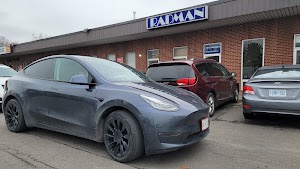
Located in Rexdale, Radman Auto Repair serves Tesla owners across Etobicoke, Toronto, Mississauga, Brampton, Vaughan, Woodbridge, Concord, North York, York Mills, Mimico, Richmond Hill, Markham, and the GTA for BMS_a079 diagnosis, maximum charge level restrictions, Tesla battery warnings, and all other Tesla service needs.
| Toronto, Ontario | Etobicoke, Ontario | Mississauga, Ontario | Brampton, Ontario |
| Vaughan, Ontario | Richmond Hill, Ontario | Markham, Ontario | Weston, Ontario |