
Etobicoke Independent Tesla Diagnostics Since 1999
Tesla Battery Cooling System Problems | Coolant & Thermal Faults
Tesla battery cooling system problems — coolant leaks, overheating warnings, pump failures, valve faults, and thermal management errors — diagnosed properly by Radman Auto Repair in Etobicoke. Serving Toronto, Mississauga, Brampton, Vaughan, North York, and the GTA since 1999. Start with a proper diagnostic path before assuming the worst.
Serving Etobicoke Since 1999
Model 3, Y, S & X
No Guesswork
Toronto & GTA
Tesla battery cooling system problems sit at the intersection of EV diagnostics and thermal management expertise. The high voltage battery pack in every Model 3, Model Y, Model S, and Model X depends on a dedicated liquid cooling circuit to stay within a safe operating temperature range. When that circuit develops a fault — a leaking hose, a failed pump, a stuck valve, a low coolant level, or a sensor error — the Battery Management System responds by limiting charging, capping performance, or triggering a battery warning message on the touchscreen.
Ontario's climate makes this especially relevant. Toronto-area winters push the thermal system hard in one direction, and humid GTA summers push it in the other. Tesla owners in Etobicoke, Vaughan, Mississauga, and across the 905 often see cooling-related symptoms appear after a cold snap, a heat wave, or a long highway charging session.
Radman is not here to scare Tesla owners into replacing expensive parts. The goal is to interpret the warning, test the related systems, and explain whether the problem is connected to the high voltage battery vs 12V battery, BMS error codes, charging equipment, cooling hardware, or another support system. Many cooling-related alerts are caused by support-system faults, not the pack itself.
If the warning appeared after a charging session, after extreme cold weather, after the car sat unused for an extended period, or alongside another electrical fault, those context details matter enormously. Bring the exact message text, any code shown on screen, and a description of recent charging behaviour. That information lets us build the diagnostic path instead of replacing parts blindly.
How Tesla Battery Cooling Works
Tesla uses a closed-loop liquid cooling system designed specifically for the high voltage battery pack. Understanding the components and how they interact makes it much easier to trace where a fault is actually coming from.
| Component | Function | Common Fault |
|---|---|---|
| Coolant Pump (Electric) | Circulates coolant through battery pack channels under BMS control | Bearing wear, electrical failure, reduced flow rate |
| Coolant Valves | Direct coolant toward heating or cooling paths depending on battery temperature | Stuck open/closed, actuator failure, position sensor fault |
| Coolant Reservoir | Maintains system volume; low level triggers BMS alert | Leak from hose, connector, or pack seal |
| Battery Pack Cooling Channels | Serpentine passages bonded to cell modules that transfer heat to coolant | Corrosion, delamination, internal leak in older packs |
| Chiller / Heat Exchanger | Connects battery cooling loop to refrigerant circuit to actively cool or warm coolant | Refrigerant leak, bypass fault, integration error with heat pump |
| Heat Pump (Model Y, newer Model 3) | Recaptures waste heat from drive units and ambient air to warm battery and cabin | Octovalve fault, refrigerant leak, reduced heating efficiency in deep cold |
| Temperature Sensors | Report pack and coolant temperature to the BMS continuously | Out-of-range reading, open circuit, condensation damage |
| Battery Management System (BMS) | Interprets sensor data and commands pump speed, valve position, and charge limits | Software fault, corrupt calibration, false fault codes |
On Model 3 and Model Y vehicles with a heat pump, the thermal architecture is significantly more integrated than on earlier Model S and Model X platforms. The octovalve — a multi-port flow control valve unique to heat pump vehicles — routes refrigerant between the battery loop, the cabin heating circuit, the drive unit waste heat recovery path, and the exterior heat exchanger. An octovalve fault can affect battery temperature management, cabin heating, and Supercharging capability simultaneously, which is why a heat-pump-era Tesla warning can look like a battery fault when it is actually an HVAC-side problem.
This overlap between the battery thermal circuit and the HVAC system is exactly why Radman's background in both EV diagnostics and automotive HVAC is valuable. Symptoms that look like battery cooling failures sometimes trace back to refrigerant charge, compressor operation, or valve calibration.
Tesla Battery Cooling Symptoms to Watch For
These are the most common signs that the Tesla battery thermal management system has a fault. Some appear together; some show up in isolation. The pattern, timing, and associated charging behaviour all matter for diagnosis.
Touchscreen message indicating the battery is too hot or too cold to accept full charge or deliver full power. Often the first visible signal of a cooling fault.
The car stops accepting charge below 80%, 70%, or another unexpected threshold. The BMS is limiting exposure to protect cells it believes are operating outside temperature spec. See the maximum charge level reduced page for more detail.
Peak Supercharger power is significantly lower than expected, even on a warm day at a well-maintained station. The BMS throttles charge rate when it cannot confirm the pack is cool enough to accept high-current charging safely.
The vehicle limits motor output to reduce heat generation inside the pack. This often accompanies a battery temperature fault rather than appearing alone. See the reduced power warning page for more.
A persistent warning that does not clear after a charge cycle or overnight rest. At this stage the BMS has logged a fault that it cannot self-resolve. See the battery needs service page.
Visible in the service menu or triggered directly on the touchscreen. A low coolant level indicates a leak somewhere in the circuit — hose, connector fitting, reservoir, or in rare cases the pack itself.
A faint gurgling, whirring, or intermittent clicking from under the rear of the vehicle (Model 3/Y) or under the front (some Model S/X configurations) may indicate a coolant pump running dry, cavitating, or bearing-damaged.
Some severe thermal faults prevent charging entirely by locking out the charge port or stopping the BMS from enabling the contactor. See the unable to charge page.
Not every one of these symptoms points directly to a cooling hardware failure. A weak 12V battery, a sensor fault, a software glitch, or a legitimate BMS calibration issue can produce identical warnings. That is why diagnosis comes before parts replacement — always.
Why Ontario Climate Stresses Tesla Thermal Management
Tesla owners in the Toronto area face thermal management challenges that drivers in more temperate climates rarely encounter. The GTA's seasonal extremes put the cooling system through a much wider operating range than the vehicle sees in California or Southern Europe.
Winter: −20°C and Below
Cold temperatures reduce coolant viscosity in a helpful direction but force the thermal system to heat the battery before charging is permitted. Slow or failed heating — often tied to the heat pump on newer models — shows up as significantly reduced range, very slow Supercharging, and a pre-conditioning failure. Toronto winters regularly dip to −15°C to −25°C in January and February, which is within the normal range for heat pump efficiency degradation.
Summer: High Ambient + Highway Charging
Sustained highway driving followed immediately by a Supercharger session is a worst-case scenario for battery temperature. If the cooling pump is underperforming or a valve is not routing coolant correctly, the BMS will throttle Supercharger power aggressively — or refuse to charge at all. GTA summer temperatures combined with stop-and-go 400-series traffic heating are a reliable way to expose a marginal cooling system fault.
Spring and Fall: Temperature Cycling
Repeated freeze-thaw cycles stress hose connections, clamp fittings, and reservoir seals. Small coolant seeps that were compressed shut in cold weather open up when rubber expands in spring warmth. This is a common time of year for Toronto Tesla owners to notice a low coolant level warning that was not present all winter.
Overnight Parking Outdoors
Many Etobicoke, North York, Scarborough, and suburban GTA Tesla owners park outdoors year-round. Vehicles left unplugged in extreme cold cannot pre-condition the battery, which means the first drive and any subsequent fast charging will push the thermal system harder than it would be pushed with overnight charging and pre-conditioning enabled.
How Radman Approaches Tesla Battery Cooling Diagnosis
Every Tesla battery cooling diagnostic at Radman follows a structured path. The goal is to identify the actual fault source — not to assume the most expensive component has failed.
The touchscreen message, any BMS alert code visible in the Tesla app or on-screen, and the sequence of events that preceded the warning are all documented before any physical inspection begins. The exact language matters — "Battery Cooling" and "Battery Temperature" fault codes point to different diagnostic branches.
A weak or failing 12V battery generates phantom warnings across multiple Tesla systems, including battery cooling and BMS alerts. Ruling out the 12V battery before proceeding eliminates the most common false-positive fault source. See the 12V battery failure page for detail.
A visual inspection of the coolant reservoir, hoses, and accessible fittings identifies obvious leaks. A low coolant level is a definitive finding that narrows the diagnosis significantly. The leak source — hose, clamp, reservoir, or pack — then determines the repair path.
Using diagnostic tooling, coolant pump speed, current draw, and valve position feedback are checked. A pump that is running but underperforming, or a valve that is reporting the wrong position, produces thermal management faults even when the pack itself is healthy.
BMS logs contain timestamped records of thermal events, charge rate reductions, and fault triggers. Reading these alongside the charging behaviour the owner has observed allows us to distinguish a single-event anomaly from a recurring pattern — and to identify whether the fault correlates with ambient temperature, charge state, or specific charging equipment.
On heat pump vehicles, the thermal fault path includes the octovalve, refrigerant circuit, and HVAC integration. If early steps do not identify a clear coolant-side fault, the heat pump circuit is evaluated as a contributing cause.
Only after all support systems are evaluated is a conclusion drawn about whether the high voltage pack itself is the fault source. Many cooling-related warnings resolve with a coolant top-up, pump replacement, valve repair, or 12V battery replacement — not a pack replacement.
The diagnostic result is explained in plain language. The owner understands what failed, what was ruled out, and what the recommended repair path is — before any commitment to parts or additional work.
This is also why the battery cluster links into Radman's broader Tesla Mechanic Toronto, Tesla brake service, Tesla suspension diagnosis, and check engine and electrical diagnostics pages. A Tesla warning rarely lives in isolation.
Tesla battery cooling warning in Toronto, Etobicoke, Vaughan, or anywhere in the GTA? Call Radman at (416) 742-4521 or book a diagnostic appointment online. We diagnose before we replace.
Related Tesla Battery Warning Pages
This page is part of Radman Auto Repair's Tesla battery warning and BMS diagnostic hub. Each page in the cluster covers a specific warning type in depth.
Tesla battery warning messages, battery failure symptoms, charging errors and BMS diagnostics in Toronto and Etobicoke for Model 3, Model Y, Model S and Model X owners.
Tesla Battery Failure Symptoms Toronto
Tesla battery failure symptoms explained for Toronto Tesla owners, including range loss, charge limit warnings, reduced power warnings, charging restrictions and battery related alerts.
Tesla Battery Needs Service Warning Toronto
Tesla battery needs service warning explained for Model 3, Model Y, Model S and Model X owners near Toronto and Etobicoke.
Tesla Maximum Charge Level Reduced Warning Toronto
Tesla maximum charge level reduced warning explained, including range loss, reduced charge limits, BMS alerts and when to book a Tesla battery diagnostic.
Tesla Unable To Charge Diagnosis Toronto
Tesla unable to charge warning, charging fault, reduced charge limit and BMS battery alert diagnosis for Toronto and Etobicoke Tesla owners.
Tesla Reduced Power Warning Diagnosis Toronto
Tesla reduced power and acceleration warning diagnosis for Model 3, Y, S and X, including battery, cooling, drive unit and low voltage system faults.
Tesla Service Links That Matter
Tesla owners often arrive for one problem and discover another related issue. These Radman resources keep the full service path connected.
The main Tesla service hub for Model 3, Model Y, Model S and Model X owners in the GTA.
Tesla Brake Service
Brake cleaning, corrosion, rotor and friction brake service for EVs that rely heavily on regenerative braking.
Tesla Suspension & Wheel Bearing Repair
For humming, clunking, vibration, ball joint, control arm and wheel bearing symptoms.
Tesla Brake Rust & Corrosion Repair
Tesla brake corrosion diagnosis and service with EV-specific maintenance in mind.
Tesla Battery Cooling Diagnosis for Toronto & GTA Owners
Radman Auto Repair is located at 321 Rexdale Blvd #4 in Etobicoke — a central location that is accessible from across the GTA without a long highway commute. Tesla owners from the following areas regularly make the trip for battery cooling and thermal management diagnosis.
Our home base. Minutes from the shop for most west-end Toronto Tesla owners.
Lakeshore-area Tesla owners reach us quickly via Hwy 427 or Kipling.
Allen Road or 400 to 401 puts most North York Tesla owners within 25 minutes.
Hwy 400 south to 401 west is a straightforward route for Vaughan and Woodbridge Tesla owners with a cooling fault.
Just south of Hwy 400, Concord and Maple residents have easy southbound access to Rexdale.
401 east or Hwy 427 north connects Mississauga Tesla owners to Etobicoke in under 20 minutes outside peak hours.
Queen Street east or Hwy 427 routes bring Brampton Tesla owners to Rexdale Blvd reliably.
Hwy 400 or 404 to 401 west is a well-travelled route for north-GTA Tesla owners heading to Etobicoke for specialized diagnosis.
Gardiner west to 427 north puts downtown Toronto Tesla owners at our Rexdale location in under 30 minutes.
If you are unsure whether your Tesla battery cooling warning warrants an immediate visit or can wait for a scheduled appointment, call us at (416) 742-4521. We can help you assess the urgency based on the specific warning message and your vehicle's current behaviour.
Frequently Asked Questions
What does a battery cooling system problem mean on a Tesla?
It means the Battery Management System has detected a condition related to battery temperature, coolant flow, pump operation, valve position, or thermal logic. The exact meaning depends on the alert text, the vehicle model, the battery state of charge, recent charging history, and any supporting fault codes. Not all cooling warnings mean the pack itself has failed — many are caused by pump, valve, sensor, or 12V battery issues that are more straightforward to address.
Can Tesla battery cooling problems reduce power or charging speed?
Yes. When the BMS detects that the battery is outside its optimal temperature range — or that coolant flow is insufficient to keep it there — it will reduce Supercharger input power, cap the maximum charge level, or limit motor output. These restrictions are deliberate safety measures to protect the pack from accelerated degradation. In severe cases the car may refuse to charge at all until the thermal fault is addressed.
What causes Tesla battery temperature warnings?
Common causes include a failed or underperforming coolant pump, a stuck or miscalibrated coolant valve, low coolant level from a leak, a sensor reporting an out-of-range temperature reading, a heat pump fault on Model Y and newer Model 3 vehicles, or ambient conditions that exceeded the system's thermal capacity. A failing 12V battery can also generate false BMS alerts including temperature-related warnings. Diagnosis is required to separate hardware faults from sensor or software anomalies.
Can a battery coolant leak affect long-term battery health?
Yes. A coolant leak allows the pack to operate at temperatures outside its optimal range. Sustained elevated temperatures accelerate lithium-ion cell degradation and can trigger permanent capacity loss over time. Running consistently cold without adequate heating (from a heat pump fault, for example) also stresses cells differently. Tesla uses a dielectric-compatible coolant specifically formulated for the high voltage battery environment, and any leak should be diagnosed and repaired before the low coolant level affects thermal management.
Should I keep driving with a Tesla battery cooling warning?
If the vehicle says it is OK to drive, avoid aggressive acceleration, avoid depleting charge below 20%, avoid fast charging until the fault is diagnosed, and book diagnostic service promptly. If the vehicle will not charge, displays unsafe operation warnings, or shows a persistent battery needs service message that will not clear, do not delay. Call Radman at (416) 742-4521 to discuss the urgency based on your specific warning.
Is every Tesla battery warning a sign that the pack needs replacing?
No. Many battery warnings — including cooling-related ones — are caused by the 12V battery, charging equipment, thermal management hardware (pump, valve, coolant level), wiring, sensors, or BMS software state. A proper diagnostic process separates a genuine high voltage pack problem from a support-system fault. Pack replacement is the last conclusion reached, not the first assumption.
How is Tesla battery cooling different on Model Y vs Model S?
Model S and older Model X vehicles use a more conventional refrigerant loop to cool the battery, with the battery cooling circuit relatively isolated from the cabin HVAC circuit. Model Y and updated Model 3 vehicles with a heat pump use a highly integrated thermal architecture where the battery loop, cabin heating, drive unit waste heat recovery, and exterior heat exchanger are all connected through the octovalve. This means a fault on a heat pump vehicle can manifest across multiple systems simultaneously and requires understanding of both the HVAC circuit and the battery thermal management path — which is part of what Radman brings to heat pump Tesla diagnosis.
Does Radman service Tesla owners from Vaughan, Mississauga, and the 905?
Yes. Radman Auto Repair at 321 Rexdale Blvd #4 in Etobicoke serves Tesla owners from across the GTA including Toronto, Mississauga, Brampton, Vaughan, Woodbridge, Concord, North York, York Mills, Mimico, Richmond Hill, Markham, and Rexdale. Our location near the 401 and 427 interchange makes it accessible from most parts of the city and inner 905.
Can Radman diagnose Tesla battery and BMS warnings?
Radman Auto Repair handles Tesla warning-message diagnosis, low voltage battery checks, charging concern diagnosis, thermal management inspection, coolant system inspection, and related EV support-system troubleshooting. True high voltage pack repair may require Tesla or a qualified high-voltage battery specialist depending on the confirmed fault — and Radman will tell you clearly if that is the case, rather than guessing.





Cities We Serve
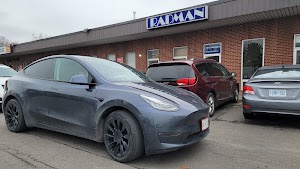
Located in Rexdale on the west side of Toronto, Radman Auto Repair serves Tesla owners across Etobicoke, Toronto, Mississauga, Brampton, Vaughan, Woodbridge, Concord, North York, York Mills, Mimico, Richmond Hill, Markham, and the wider GTA for battery cooling diagnosis, thermal management faults, and all other Tesla service needs.
| Toronto, Ontario | Etobicoke, Ontario | Mississauga, Ontario | Brampton, Ontario |
| Vaughan, Ontario | Richmond Hill, Ontario | Markham, Ontario | Weston, Ontario |