
Etobicoke Independent Tesla Diagnostics Since 1999
Tesla Unable To Charge | Charging Fault & Battery Diagnosis Toronto
Tesla unable to charge covers a wide range of causes — from the charging cable to the charge port, through the onboard charger, through to the 12V battery, BMS, and high voltage pack. The same warning message can have very different root causes and very different repair costs. Radman Auto Repair in Etobicoke works through the full charging system stack for Toronto and GTA Tesla owners before drawing any conclusions about the battery.
Serving Etobicoke Since 1999
Model 3, Y, S & X
No Guesswork
Toronto & GTA
When a Tesla says "Unable to Charge," it is describing a result — charging is not happening — without telling the owner why. The cause can sit anywhere in the full charging system: the cable on the floor, the wall connector on the garage wall, the charge port at the back of the car, the onboard charger inside the vehicle, the 12V auxiliary battery, the Battery Management System's charge restrictions, or the high voltage pack itself.
This matters in dollar terms. A damaged cable could be a $50 fix. A charge port latch is a few hundred dollars. A 12V auxiliary battery is $300–$500. An onboard charger fault is more, but far less than an HV pack. Working through the charging system from the outside in — rather than assuming the pack is at fault and pricing a $15,000–$30,000 replacement — is the only rational diagnostic approach. Radman Auto Repair applies that approach at 321 Rexdale Blvd #4 in Etobicoke for every Tesla charging complaint.
If the car is also showing a BMS code, a Maximum Charge Level Reduced message, or a Battery Needs Service warning alongside the charging fault, those companion messages significantly narrow the diagnostic path. Write down the exact wording of every message on screen and bring it in.
Tesla Charging Fault Messages — What Each One Means
The exact wording of the charging message is the first diagnostic clue. These are the most common charging-related messages and what each indicates about the likely fault location.
Unable to ChargeCharging did not start or stopped immediately. The vehicle and charger could not complete the charging handshake. Common causes: charge port fault, damaged cable, wall connector communication error, 12V battery too low to initiate charging, Supercharger stall fault.
Start outside: cable, port, then power source
Unable to Charge — Maximum Charge Level ReachedCharging started and reached a BMS-imposed cap lower than the set limit. This is distinct from a charging failure — charging occurred but was restricted. Associated with BMS_a079. See the maximum charge level reduced page.
BMS charge cap — charging-system investigation plus 12V
Charging Stopped — Check Charging EquipmentTesla is pointing at the charging equipment as the problem source. Could be a wall connector fault, a cable communication error, a Supercharger stall fault, or a charge port latch issue preventing proper connection detection.
Try a different cable and different charge source first
Scheduled Charging Not EnabledThe vehicle has a charging schedule active that is preventing immediate charging. This is a settings issue, not a hardware fault — check the scheduled departure settings in the Tesla app.
Settings issue — no hardware diagnosis needed
Charging Slowed — Charge Port May Be OverheatingThe charge port temperature sensor detected elevated temperature during a charging session. The vehicle reduced charging current to protect the port. Common on Level 2 chargers with high ambient temperatures or in Supercharger sessions after sustained highway driving. May also indicate a charge port pin issue.
Thermal protection at the port — port inspection needed
Car Won't Wake / Door Handles Don't Extend / Won't Connect to AppThese are not charging messages but they often co-present with charging failures. The vehicle cannot initiate a charging session if the 12V battery is too depleted to run the vehicle's systems. In GTA winter conditions, this pattern — can't wake up, can't charge — almost always indicates severe 12V depletion. See the 12V battery failure page.
12V battery failure — priority evaluation
The Tesla Charging System — Working From Outside In
Every Tesla charging complaint is diagnosed by working outward from the least expensive, most accessible component toward the most expensive and least accessible. This is the sequence.
Try a different cable. Try a different wall outlet. If using a Level 2 wall connector, try a Level 1 cable in a different outlet. If the fault is only on one charger and works on another, the fault is in the charging equipment, not the car. This test costs nothing and takes five minutes — it rules out the most common, least expensive causes entirely.
The charge port LED is diagnostic: white means ready, green pulsing means charging, amber/orange means a fault, red means charging stopped. Inspect the charge port for debris, ice (Ontario winters produce ice-locked charge ports regularly), bent or damaged pins, corrosion, and latch engagement. The latch mechanism must fully engage for the vehicle to recognise the connector. A charge port latch fault prevents the vehicle from detecting a connected charger. A charge port temperature sensor fault produces charging slowdown or stoppage.
The 12V battery powers all charging control logic. A 12V battery that drops below operating threshold prevents the charging communication protocols from completing. In GTA winter conditions, overnight outdoor parking depletes the 12V through repeated BMS wake cycles without the DC-DC converter running to restore charge. A car that won't begin a charging session — particularly one that also struggles to wake up, doesn't extend door handles, or can't be reached via the app — almost certainly has a 12V fault contributing to the charging failure. See the 12V battery failure page.
The onboard charger converts AC power from a wall connector or Level 1 outlet to DC for the battery. Onboard charger faults produce AC charging failures while Supercharger (DC fast charging) may still work — because Superchargers bypass the OBC and charge the battery directly. If the vehicle charges normally on a Supercharger but refuses Level 1 or Level 2 AC charging, the onboard charger is the primary suspect. OBC faults require professional diagnosis and usually show as fault codes in the vehicle's charging system log.
A BMS charge restriction — imposed by codes such as BMS_a079 — caps the maximum charge level the vehicle will accept. This is not a charging failure; it is a BMS-imposed ceiling. Thermal management faults that allowed the battery to overheat during a previous charge session can also produce charging restrictions. See the battery cooling system problems page.
HV contactor faults (the contactors connect the pack to the charging circuit) and genuine HV pack faults are the final diagnostic step. These are the most expensive causes and the last ones to be considered — only after the cable, port, 12V, OBC, and BMS have been evaluated and cleared. See the can a Tesla battery be repaired page for the repair-vs-replacement framework that applies here.
Tesla Unable To Charge — Common Causes by System
The latch mechanism must fully engage for the vehicle to recognise the connector and initiate charging. A worn, stuck, or misaligned latch prevents connector detection. The charge port LED may show orange or the connector may feel loose even when inserted. More common in high-mileage vehicles and in GTA winters where ice can physically obstruct the latch.
The charge port pilot signal circuit negotiates the charging session between the vehicle and the charger. A communication fault prevents this handshake from completing. May show as "Charging Stopped — Check Charging Equipment" even when the equipment is fine. The fault can be in the charge port wiring, the charge port controller, or the pilot circuit components.
Physical damage to the charge port pins from rough connector insertion, debris accumulation, or corrosion produces charging failures that can look identical to a BMS or battery fault. The port should be visually inspected with a light before any other diagnosis is attempted. In Ontario winters, ice in the charge port is a common cause of "unable to charge" that owners do not think to check.
The Wall Connector Gen 2 and Gen 3 contain communication circuits. A fault in the wall connector itself — not the car — produces an "Unable to Charge" or "Check Charging Equipment" message. The simplest test is a different cable or charger. If a NEMA 14-50 adapter on a different outlet charges the car when the wall connector doesn't, the wall connector is the fault source.
A 12V battery that drops below reliable operating voltage prevents the charging control systems from completing the communication protocol needed to initiate charging. In GTA winter, this pattern is common — the car was parked outdoors unplugged, the 12V depleted overnight, and the car cannot begin charging in the morning. See the 12V battery failure page.
An OBC fault produces AC charging failure while DC Supercharging may continue to work. Owners may not notice an OBC fault for some time if they primarily use Superchargers. The OBC failure becomes apparent when home Level 1 or Level 2 charging stops working. OBC faults are confirmed by professional diagnostic scan showing OBC-specific fault codes.
The BMS has imposed an invisible maximum charge ceiling. Charging starts normally but stops at a level lower than the set limit. Produces "Unable to Charge — Maximum Charge Level Reached." This is not a charging hardware failure — it is a BMS decision based on a detected battery condition. See the BMS_a079 page and the maximum charge level reduced page.
A coolant pump fault, valve fault, or low coolant level that prevented adequate battery cooling during a previous charge session can cause the BMS to impose charging restrictions or halt charging as a protective measure. Recurring charging failures that are preceded by Supercharger sessions or high-ambient-temperature charging point toward a thermal investigation. See the battery cooling system problems page.
What to Try Before Booking a Diagnostic
These steps cost nothing and take minutes. If any of them resolves the fault, the cause was in the equipment or settings — not the vehicle.
Owner Troubleshooting Sequence
- Note the exact message on the touchscreen and photograph it. Every word matters diagnostically.
- Check the charge port LED: orange or red means a vehicle-side fault is logged; white means the port is ready and the issue may be equipment-side.
- Inspect the charge port physically for debris, ice, bent pins, or corrosion. In Ontario winter, defrost or clear ice from the port before plugging in.
- Try a different cable. If the fault is only on one cable and not another, the cable is the problem.
- Try a different power source — a different wall outlet, a different charger location, or a Supercharger (tests whether the fault is AC-only or DC too).
- Check the Tesla app for a scheduled charging setting that might be delaying or blocking the session.
- Reboot the touchscreen (hold both scroll wheel buttons for 10–15 seconds) — occasionally clears transient charging communication faults.
- If the car is also slow to wake up, not extending door handles, or not responding to the app, the 12V battery is likely below operating threshold — call Radman before driving or trying further charging attempts.
If none of those steps resolves the fault, or if the car is also showing BMS codes, battery service messages, or reduced power warnings, the fault has moved beyond the equipment layer and requires proper diagnostic work. Call (416) 742-4521 to describe the pattern — we can often help you assess the likely fault layer before you make the trip.
How Radman Approaches Tesla Battery Warnings
This is also why the battery cluster links into Radman's broader Tesla Mechanic Toronto, Tesla brake service, Tesla suspension diagnosis, and check engine and electrical diagnostics pages. A Tesla warning rarely lives in isolation.
Tesla won't charge in Toronto, Etobicoke, Vaughan, or the GTA? Call (416) 742-4521 and describe the message and what you've already tried — we work from the cable in, not from the pack out.
Related Tesla Battery Warning Pages
This page is part of Radman Auto Repair's Tesla battery warning and BMS diagnostic hub.
The main Tesla battery warning message and failure diagnostics hub for Toronto and Etobicoke.
Tesla Battery Warning Messages & Failure Diagnostics Toronto
Tesla battery warning messages, battery failure symptoms, charging errors and BMS diagnostics in Toronto and Etobicoke for Model 3, Model Y, Model S and Model X owners.
Tesla Battery Failure Symptoms Toronto
Tesla battery failure symptoms explained including range loss, charge limit warnings, reduced power and charging restrictions.
Tesla Battery Needs Service Warning Toronto
Tesla battery needs service warning explained for Model 3, Model Y, Model S and Model X owners near Toronto and Etobicoke.
Tesla Maximum Charge Level Reduced Warning Toronto
Tesla maximum charge level reduced warning explained including range loss, reduced charge limits and BMS alerts.
Tesla Reduced Power Warning Diagnosis Toronto
Tesla reduced power and acceleration warning diagnosis for Model 3, Y, S and X including battery, cooling, drive unit and low voltage system faults.
Tesla BMS Error Codes Explained Toronto
Tesla BMS error codes explained for owners seeing battery management system alerts, charge limits, reduced power or high voltage battery warnings.
Tesla Service Links That Matter
Tesla owners often arrive for one problem and discover another related issue. These Radman resources keep the full service path connected.
The main Tesla service hub for Model 3, Model Y, Model S and Model X owners in the GTA.
Tesla Brake Service
Brake cleaning, corrosion, rotor and friction brake service for EVs that rely heavily on regenerative braking.
Tesla Suspension & Wheel Bearing Repair
For humming, clunking, vibration, ball joint, control arm and wheel bearing symptoms.
Tesla Brake Rust & Corrosion Repair
Tesla brake corrosion diagnosis and service with EV-specific maintenance in mind.
Tesla Unable To Charge Diagnosis — Toronto & GTA
Radman Auto Repair is at 321 Rexdale Blvd #4 in Etobicoke, near the 401 and 427 interchange. Tesla charging failures are among the most varied diagnostic presentations in the cluster — the same message on the touchscreen can point to a $50 cable, a charge port latch repair, a 12V battery, or a BMS charge restriction. GTA winters produce a high volume of ice-related charge port faults and 12V-depleted-charging-failure cases that resolve without any battery work. Tesla owners from across the city come to Radman specifically to have the charging system evaluated properly before any expensive components are quoted.
Home base. Ice-locked charge ports and 12V-depleted charging failures from outdoor overnight parking are the most common local presentations in winter.
Lakeshore outdoor parking — both ice port blockage in January and 12V depletion charging failures are common without overnight Level 2.
Allen Road or 400 to 401 west. Onboard charger faults are more commonly identified in North York Tesla ownership, often after the owner noticed Supercharging still worked but home charging stopped.
Hwy 400 south. BMS_a079 charge level restrictions after 400-series Supercharger sessions are the most common Vaughan charging complaint pattern.
400 south. Similar Supercharger-session BMS cap pattern to Vaughan — charging stopped at a lower level than set, maximum charge level reduced message.
401 east or 427 north. Mississauga Tesla charging faults frequently trace to wall connector faults or 12V depletion rather than HV pack issues.
Queen Street east or 427. Brampton Tesla owners arrive with unable-to-charge faults that are often charge port latch issues or BMS_a079 charge caps.
404 or 400 to 401 west. North-GTA owners come for charging fault second opinions — charging failures that were quoted as pack replacements are frequently resolved with charge port, 12V, or OBC diagnosis.
Gardiner west to 427 north. Condo surface outdoor parking produces the highest rate of 12V-depletion and ice-port-blockage charging failures in the city — both resolve without HV battery work.
Tesla won't charge? Call (416) 742-4521. Tell us the exact message, whether other chargers work, and whether the car is also slow to wake. We can help you narrow the fault layer before you make the trip.
Frequently Asked Questions
Why is my Tesla unable to charge?
Tesla unable to charge covers several distinct failure modes: the vehicle refuses to begin a charging session; charging starts but stops prematurely; or charging stops at a lower-than-expected maximum level with a "Maximum Charge Level Reached" message. Causes from most to least accessible: charging cable or wall connector fault; charge port debris, ice, pin damage, or latch fault; 12V battery too depleted to initiate charging; onboard charger fault (AC charging only); BMS charge restriction (BMS_a079); thermal management fault; HV contactor or pack fault. The diagnosis works from outside in.
Can an unable to charge fault be a charge port or cable issue?
Yes — the charge port and cable are among the most commonly overlooked causes. The charge port contains a latch mechanism, a pilot signal communication circuit, and a temperature sensor. A latch fault prevents connector detection. In Ontario winters, ice in the charge port is a frequent cause of charging failures that owners don't think to check. A damaged cable or wall connector with a communication fault produces "Check Charging Equipment" messages even though the car is fine. The first test is always a different cable on a different outlet — if that works, the fault is in the equipment.
Can a 12V battery fault cause Tesla unable to charge?
Yes. The 12V battery powers all charging control logic. A 12V battery below operating voltage prevents charging sessions from completing or initiating. In GTA winter, overnight outdoor parking depletes the 12V through BMS wake cycles without Level 2 charging to top it up. A car that won't charge in the morning — especially one that is also slow to wake up, doesn't extend door handles, or can't be reached via the Tesla app — almost certainly has a 12V fault as the primary cause of the charging failure. See the 12V battery failure page.
What is the difference between unable to charge and maximum charge level reached?
"Unable to Charge" without qualification means charging did not start or stopped very early — the charger and vehicle could not complete the handshake. "Unable to Charge — Maximum Charge Level Reached" means charging started and reached an internally imposed BMS ceiling lower than the owner's set limit. The second message means charging occurred up to a restricted level; the first means charging could not happen at all. The second is associated with BMS_a079 and is covered in detail on the maximum charge level reduced page.
What should be checked before assuming the main battery failed?
In order: the charging cable and power source (try a different cable and different outlet); the charge port (check for ice, debris, pin damage, LED colour, latch engagement); the 12V auxiliary battery; the onboard charger (does Supercharging work when Level 2 doesn't?); thermal management conditions during the failed charge session; and BMS fault data. Only after all of these are evaluated does the HV pack become the primary focus. Radman Auto Repair follows this sequence at 321 Rexdale Blvd #4 in Etobicoke.
Is every Tesla battery warning a full battery replacement?
No. Tesla unable to charge is one of the warnings most frequently resolved by non-pack causes — ice in the charge port, a cable fault, a 12V battery, an OBC fault, or a BMS charge restriction. Diagnosis separates a genuine HV pack condition from the many support-system and equipment causes that produce identical symptoms. See the can a Tesla battery be repaired page.
Does Radman service Tesla owners from Toronto and the GTA?
Yes. Radman Auto Repair at 321 Rexdale Blvd #4 in Etobicoke serves Tesla owners from Toronto, Mississauga, Brampton, Vaughan, Woodbridge, Concord, North York, York Mills, Mimico, Richmond Hill, Markham, Rexdale, and the wider GTA. Our location near the 401 and 427 interchange is accessible from most parts of the city and the inner 905.
Can Radman diagnose Tesla battery and BMS warnings?
Radman Auto Repair handles Tesla warning-message diagnosis, BMS fault code review, 12V battery evaluation, charging system inspection, charge port assessment, thermal management diagnosis, and related EV support-system troubleshooting. True high voltage pack repair may require Tesla or a qualified high-voltage battery specialist depending on the confirmed fault — and we will tell you clearly if that is the case.





Cities We Serve
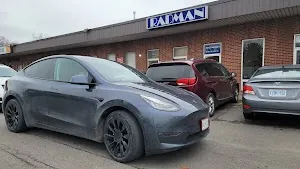
Located in Rexdale, Radman Auto Repair serves Tesla owners across Etobicoke, Toronto, Mississauga, Brampton, Vaughan, Woodbridge, Concord, North York, York Mills, Mimico, Richmond Hill, Markham, and the GTA for unable to charge diagnosis, Tesla charging faults, battery warnings, and all other Tesla service needs.
| Toronto, Ontario | Etobicoke, Ontario | Mississauga, Ontario | Brampton, Ontario |
| Vaughan, Ontario | Richmond Hill, Ontario | Markham, Ontario | Weston, Ontario |