
Etobicoke Independent Tesla Diagnostics Since 1999
Tesla Battery Failure Symptoms | Warning Signs & Diagnosis Toronto
Tesla battery failure symptoms are not always dramatic — and they are not always caused by the high voltage battery pack. Range loss, charging faults, power restrictions, BMS codes, and wake-up problems can all originate in different parts of the battery ecosystem. Radman Auto Repair in Etobicoke helps Toronto and GTA Tesla owners identify which system is actually responsible before any expensive decisions are made.
Serving Etobicoke Since 1999
Model 3, Y, S & X
No Guesswork
Toronto & GTA
Tesla battery failure symptoms are not always dramatic, and they are not always actually caused by the high voltage battery pack. The battery ecosystem in a Tesla includes the HV pack, the 12V auxiliary battery, the Battery Management System, the thermal management system, and the charging interface — and a fault in any of those components can produce symptoms that look like HV battery failure. Separating them is the central job of proper diagnosis.
This page is designed as a diagnostic entry point for Tesla owners in Toronto and the GTA who have noticed something is off with their vehicle's battery or charging behaviour, but have not yet identified a specific message or code. For owners who have a specific warning message or BMS code, the individual pages linked throughout this page provide deeper coverage of each symptom type.
The most important principle across the entire battery ecosystem: the 12V auxiliary battery is the most common single cause of Tesla battery symptoms in GTA ownership — more common than genuine HV pack faults. It is the first thing Radman evaluates, every time. See the high voltage vs 12V battery page for why this distinction matters so much.
Normal Battery Behaviour vs Symptoms That Need Diagnosis
The first step for any Tesla owner noticing battery or range changes is distinguishing normal behaviour from an actual fault. These two columns describe the boundary.
Normal — No Diagnosis Needed
- Range is lower in January and February — Ontario cold reduces EV range by 20–40%, which is normal and expected
- Cold-morning power feels slightly reduced for the first 10–15 minutes of driving — the BMS warms the battery through operation, this clears on its own
- Range at "full" charge has declined gradually over several years of ownership — capacity naturally reduces at approximately 1–2% per year with typical use
- Supercharger slows down after sustained highway driving — the BMS throttles charging to protect a warm pack
- Regenerative braking is reduced on a very cold morning — normal in temperatures below −10°C until the battery reaches operating temperature
Abnormal — Book a Diagnostic
- A battery warning message appears on the touchscreen: Battery Needs Service, Maximum Charge Level Reduced, High Voltage Battery Requires Service
- A BMS code appears: BMS_a067, BMS_a068, BMS_a079
- Range dropped suddenly by more than 15% after a specific charging session or event — not a gradual seasonal or aging change
- Car stops charging below the set limit with an Unable to Charge or Maximum Charge Level Reached message
- Power restriction does not clear after 20+ minutes of normal driving in non-extreme temperatures
- Car will not wake up, door handles don't extend, or app can't reach the vehicle — even after rest
- Multiple simultaneous warning messages alongside the battery symptoms
Tesla Battery Symptom Navigator — Find Your Starting Point
Each of these symptoms maps to a most-likely cause category and a specific page with deeper coverage. Start with the symptom that matches what you are experiencing.
Tesla's strongest battery alert language. The BMS has logged a persistent, service-grade fault. Causes include 12V battery fault, thermal management fault, wiring fault, or a genuine HV pack condition. Do not agree to pack replacement before diagnosis.
→ Battery Needs Service page
The BMS has imposed an invisible charge ceiling lower than the set limit. Closely linked to BMS_a079. Causes include 12V fault during a charging session, thermal management fault, charging equipment anomaly, or cell voltage condition.
→ Maximum Charge Level Reduced page and BMS_a079 page
A specific BMS alert code narrows the diagnostic focus significantly. Each code has its own diagnostic character: a067 is performance limitation (often thermal), a068 is service required (persistent fault), a079 is charge level cap.
→ BMS Error Codes page — links to each individual code page
The BMS or drive unit is limiting output. Causes span battery temperature (most common in GTA winter), thermal management hardware fault, 12V fault, HV battery condition, or drive unit fault. Context — when it appeared, whether it cleared — is the key diagnostic input.→ Reduced Power Warning page
Charging failure spans the entire charging system: cable, charge port, 12V battery, onboard charger, BMS charge restriction, or HV pack. The widest diagnostic funnel in the cluster — start with a different cable on a different outlet.
→ Unable To Charge page
A sudden large range reduction (more than 15% overnight or after a specific session) is more consistent with a BMS charge cap than genuine degradation. A cap from a 12V fault or thermal fault can appear overnight. Distinguish from gradual aging.
→ Maximum Charge Level Reduced page
Gradual capacity decline is normal for all lithium-ion batteries. The question is whether the rate of decline is within expected parameters for the vehicle's age and mileage. Around 1–2% per year is typical. Excessive decline warrants a state-of-health diagnostic.
→ Battery Degradation page
These are classic 12V auxiliary battery failure symptoms — not HV battery symptoms. A depleted or failed 12V battery prevents the vehicle's systems from powering up, which owners frequently mistake for a much more serious HV battery failure.
→ 12V Battery Failure page
Slow or terminated Supercharger sessions can be caused by battery temperature (pack too hot after highway driving), a thermal management fault, a charge port communication issue, a BMS charge cap (BMS_a079), or in some cases a Supercharger stall fault rather than a vehicle fault.
→ BMS_a079 page and Unable To Charge page
Multiple simultaneous warnings — especially a BMS code alongside Battery Needs Service or Reduced Power — indicate the fault may have escalated or has multiple dimensions. The full stored BMS fault history, not just the active alert, shapes the diagnostic direction. Prompt service is appropriate.
→ BMS Error Codes page and Battery Needs Service page
If the car reaches the set charge limit (e.g. 90%) but the displayed range is lower than expected, this is more consistent with capacity reduction (degradation) than a charge cap. It may also reflect the Ontario winter range penalty rather than a battery fault.
→ Battery Degradation page
Thermal management faults produce a recognisable symptom cluster: consistent performance limitation regardless of ambient temperature, charging that slows or stops due to thermal protection, and in some cases a specific cooling system warning on the touchscreen.
→ Battery Cooling System Problems page
The Most Important Thing to Know: 12V vs HV Battery Symptoms
In GTA winter conditions — overnight outdoor parking at −15°C to −25°C without Level 2 charging, repeated BMS wake cycles draining the 12V, then a cold morning drive — the 12V battery is under more stress than in any other ownership pattern in North America. This is why Toronto and GTA Tesla owners experience a higher rate of 12V-induced battery symptoms than owners in milder climates, and why proper diagnosis is especially valuable here.
How Radman Approaches Tesla Battery Warnings
This is also why the battery cluster links into Radman's broader Tesla Mechanic Toronto, Tesla brake service, Tesla suspension diagnosis, and check engine and electrical diagnostics pages. A Tesla warning rarely lives in isolation.
Tesla battery symptoms in Toronto, Etobicoke, Vaughan, or the GTA? Call (416) 742-4521. Describe what you're seeing and we'll help you identify where in the battery ecosystem to start looking.
Related Tesla Battery Warning Pages
This page is part of Radman Auto Repair's Tesla battery warning and BMS diagnostic hub.
The main Tesla battery warning message and failure diagnostics hub for Toronto and Etobicoke.
Tesla Battery Warning Messages & Failure Diagnostics Toronto
Tesla battery warning messages, battery failure symptoms, charging errors and BMS diagnostics for Toronto and GTA Tesla owners.
Tesla Battery Needs Service Warning Toronto
Tesla battery needs service warning explained for Model 3, Model Y, Model S and Model X owners near Toronto and Etobicoke.
Tesla Maximum Charge Level Reduced Warning Toronto
Tesla maximum charge level reduced warning explained including range loss, reduced charge limits and BMS alerts.
Tesla Unable To Charge Diagnosis Toronto
Tesla unable to charge warning, charging fault, reduced charge limit and BMS battery alert diagnosis for Toronto and Etobicoke Tesla owners.
Tesla Reduced Power Warning Diagnosis Toronto
Tesla reduced power and acceleration warning diagnosis for Model 3, Y, S and X.
Tesla BMS Error Codes Explained Toronto
Tesla BMS error codes explained for owners seeing battery management system alerts, charge limits, reduced power or high voltage battery warnings.
Tesla Service Links That Matter
Tesla owners often arrive for one problem and discover another related issue. These Radman resources keep the full service path connected.
The main Tesla service hub for Model 3, Model Y, Model S and Model X owners in the GTA.
Tesla Brake Service
Brake cleaning, corrosion, rotor and friction brake service for EVs that rely heavily on regenerative braking.
Tesla Suspension & Wheel Bearing Repair
For humming, clunking, vibration, ball joint, control arm and wheel bearing symptoms.
Tesla Brake Rust & Corrosion Repair
Tesla brake corrosion diagnosis and service with EV-specific maintenance in mind.
Tesla Battery Symptom Diagnosis — Toronto & GTA
Radman Auto Repair is at 321 Rexdale Blvd #4 in Etobicoke, near the 401 and 427 interchange. Tesla battery symptoms in the GTA are heavily influenced by Ontario's climate — winter conditions create more 12V depletion, more thermal-trigger BMS alerts, more charge port ice blockages, and more Supercharger-session-related BMS caps than almost any other ownership environment. Understanding which symptom maps to which cause is the foundation of Radman's approach.
Home base. The widest variety of Tesla battery symptoms seen locally — from 12V depletion in winter to BMS codes and charge restrictions.
Lakeshore outdoor parking — 12V-induced symptoms (won't wake, won't charge) are the dominant battery complaint pattern in winter.
400 to 401 west. BMS codes and Supercharger-linked charge restrictions are common alongside the thermal-trigger symptoms from 400-series highway use.
Hwy 400 south. The widest symptom variety in the cluster — winter cold-soak, 400-series Supercharger caps, and thermal management faults all common.
400 south. Supercharger-related charge restriction symptoms are among the most frequently reported by Concord and Maple Tesla owners.
401 east or 427 north. A broad mix of battery symptoms — Mississauga Tesla owners frequently present with charging faults and BMS codes that resolve with 12V or thermal repair.
Queen Street east or 427. Brampton battery symptoms often include won't-charge faults and maximum charge level reduced messages tied to 12V or charging system causes.
404 or 400 to 401 west. North-GTA owners are among the most likely to arrive with a prior replacement quote and a need for proper symptom-to-cause diagnosis.
Gardiner west to 427 north. Condo surface outdoor parking is the highest-risk environment for 12V depletion and cold-related battery symptoms in the city.
Noticing Tesla battery symptoms? Call (416) 742-4521 and describe what you are seeing — range issues, charging behaviour, messages on screen, or wake-up problems. We can help you identify where in the battery ecosystem to start before you make the trip.
Frequently Asked Questions
What are the most common Tesla battery failure symptoms?
The most commonly noticed Tesla battery symptoms in GTA ownership are: a battery warning message on the touchscreen (Battery Needs Service, Maximum Charge Level Reduced, High Voltage Battery Requires Service); a BMS code (BMS_a067, BMS_a068, BMS_a079); charging that stops below the set limit; reduced power or sluggish acceleration; slower than expected Supercharger sessions; sudden range reduction after a specific event; and the car not waking up or responding to the app — which is frequently a 12V battery symptom rather than an HV pack symptom. Each maps to a different starting point in the diagnostic sequence.
Can a 12V battery cause Tesla battery failure symptoms?
Yes — and this is the single most important fact for GTA Tesla owners. The 12V auxiliary battery powers the BMS, charging control systems, door handles, display, and app interface. When it fails, the symptoms look like HV battery failure: the car won't wake up, charging won't start, BMS codes appear, battery warning messages display. In Toronto winter, overnight outdoor parking depletes the 12V through repeated BMS wake cycles. A 12V replacement resolves many battery failure presentations entirely. See the 12V battery failure page.
How do I know if my Tesla battery symptoms are serious?
Prompt diagnosis is appropriate for: any explicit battery warning message that does not clear; a charging fault preventing safe range; persistent power restriction that doesn't clear after warm-up; a BMS code on the touchscreen; or rapidly worsening symptoms. Monitoring is acceptable for: mild gradual range reduction over months without a message; cold-morning power restriction that clears within 15 minutes; and winter range reduction with no other symptoms. When uncertain, a call to (416) 742-4521 describing the symptom pattern helps assess urgency before booking.
When should Tesla battery warnings be diagnosed?
Within a few days (not months) for: any explicit battery service message that persists; a charging fault limiting range; a BMS code; or symptoms that are rapidly changing. Monitoring with a prompt booking is fine for: mild range reduction without a message; cold-morning behaviour that clears on its own; and seasonal range changes consistent with Ontario winter. Radman Auto Repair at 321 Rexdale Blvd #4 in Etobicoke is available for Tesla battery symptom diagnosis for owners across Toronto and the GTA.
What Tesla battery symptoms are caused by the cooling system?
Thermal management faults produce persistent performance limitation that doesn't improve with driving time, charging that slows or stops due to thermal protection, BMS_a067 codes that appear consistently regardless of ambient temperature, and Supercharger sessions that are dramatically slower than expected even without prior highway driving. These symptoms are caused by coolant pump faults, valve faults, heat pump faults (on applicable models), or coolant leaks — all repaired without HV pack work in most cases. See the battery cooling system problems page.
Is every Tesla battery symptom a full battery replacement?
No. The majority of Tesla battery symptoms in GTA ownership trace to support-system causes — 12V battery, thermal management hardware, charging equipment, wiring — rather than the HV pack. Proper diagnosis identifies the actual fault source before any repair recommendation is made. See the can a Tesla battery be repaired page and the high voltage vs 12V battery page for the full framework.
Does Radman service Tesla owners from Toronto and the GTA?
Yes. Radman Auto Repair at 321 Rexdale Blvd #4 in Etobicoke serves Tesla owners from Toronto, Mississauga, Brampton, Vaughan, Woodbridge, Concord, North York, York Mills, Mimico, Richmond Hill, Markham, Rexdale, and the wider GTA. Our location near the 401 and 427 interchange is accessible from most parts of the city and the inner 905.
Can Radman diagnose Tesla battery and BMS warnings?
Radman Auto Repair handles Tesla warning-message diagnosis, BMS fault code review, 12V battery evaluation, thermal management inspection, charging system diagnosis, and related EV support-system troubleshooting. True high voltage pack repair may require Tesla or a qualified high-voltage battery specialist depending on the confirmed fault — and we will tell you clearly if that is the case.





Cities We Serve
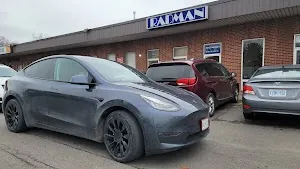
Located in Rexdale, Radman Auto Repair serves Tesla owners across Etobicoke, Toronto, Mississauga, Brampton, Vaughan, Woodbridge, Concord, North York, York Mills, Mimico, Richmond Hill, Markham, and the GTA for battery failure symptom diagnosis, Tesla battery warnings, and all other Tesla service needs.
| Toronto, Ontario | Etobicoke, Ontario | Mississauga, Ontario | Brampton, Ontario |
| Vaughan, Ontario | Richmond Hill, Ontario | Markham, Ontario | Weston, Ontario |